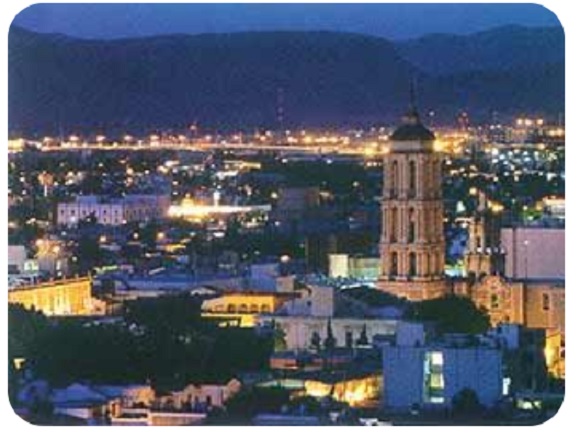

SALTILLO, Coahuila — The city of Saltillo has been ranked as the second most polluted city in Mexico, with fine particulate matter levels skyrocketing to over three times the maximum limit recommended by the World Organization of Health (WHO).
According to newly released data from the international air quality platform IQAir, Saltillo registered a stark daily average of 32.3 micrograms per cubic meter of PM2.5—tiny, dangerous airborne particles that can bypass respiratory defenses. This figure places the Coahuila capital just behind Tlaxcalancingo, Puebla, which held the top spot for the country’s worst air quality.
The sharp upward spike represents a severe regression for Saltillo. Monitoring records from local stations, including the Ministry of Finance and the Universidad del Valle de México (UVM) campus, reveal a steady year-over-year degradation. The city averaged 17.7 previously, meaning its airborne particle presence nearly doubled over a short window, vastly exceeding the WHO’s strict health safety benchmark of 10.
The Shared Atmospheric Basin
Environmental experts highlight that Saltillo’s predicament is intertwined with neighboring industrial zones. Local monitoring authorities have noted that the Saltillo metropolitan area shares an atmospheric basin with the highly industrialized Monterrey Metropolitan Zone (ZMM) in Nuevo León. Five municipalities within Nuevo León ranked among the top 25 most polluted nationwide.

While environmental consultants clarify that Saltillo features multiple wind currents that impact how toxins move, preliminary meteorological data strongly suggests cross-border pollution. Winds routinely carry heavy industrial emissions across the shared basin directly into Saltillo.
As regional industrial production intensifies, environmental advocates are calling for tighter local regulations and immediate air quality control policies to mitigate a worsening public health crisis across northeast Mexico.
Source: Vanguardia